The problem
Before taking a position, pitching a deal, or backing a campaign, the team needed to know who really decides at a company: how its chair or CEO makes decisions, how they have handled activists before, who holds the shares, and what a change in leadership would set in motion. That picture was scattered across years of proxy statements, ownership filings, settlement agreements, and interviews, and each analyst rebuilt it by hand in a memo that went stale and couldn't be compared with the next.
What we built
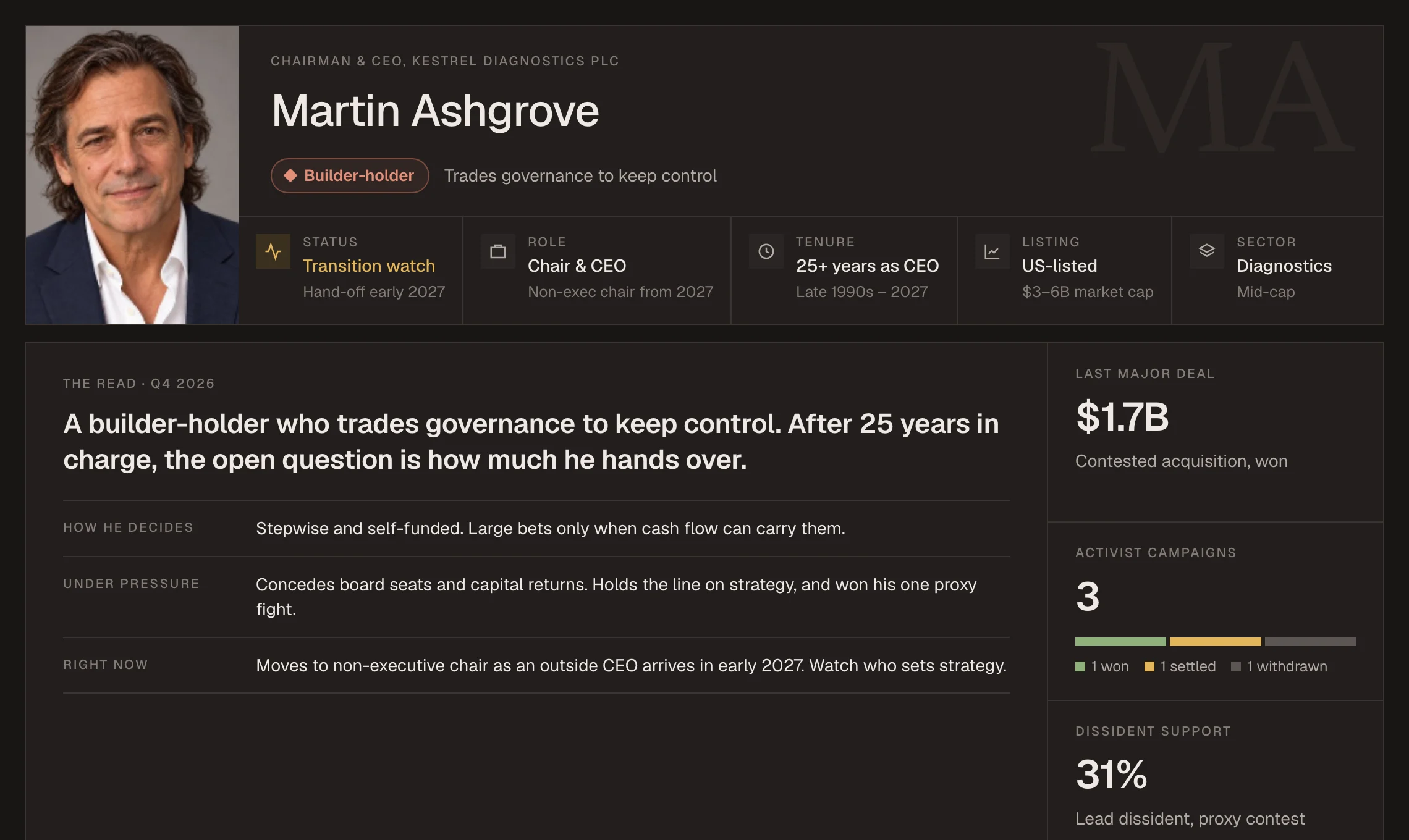
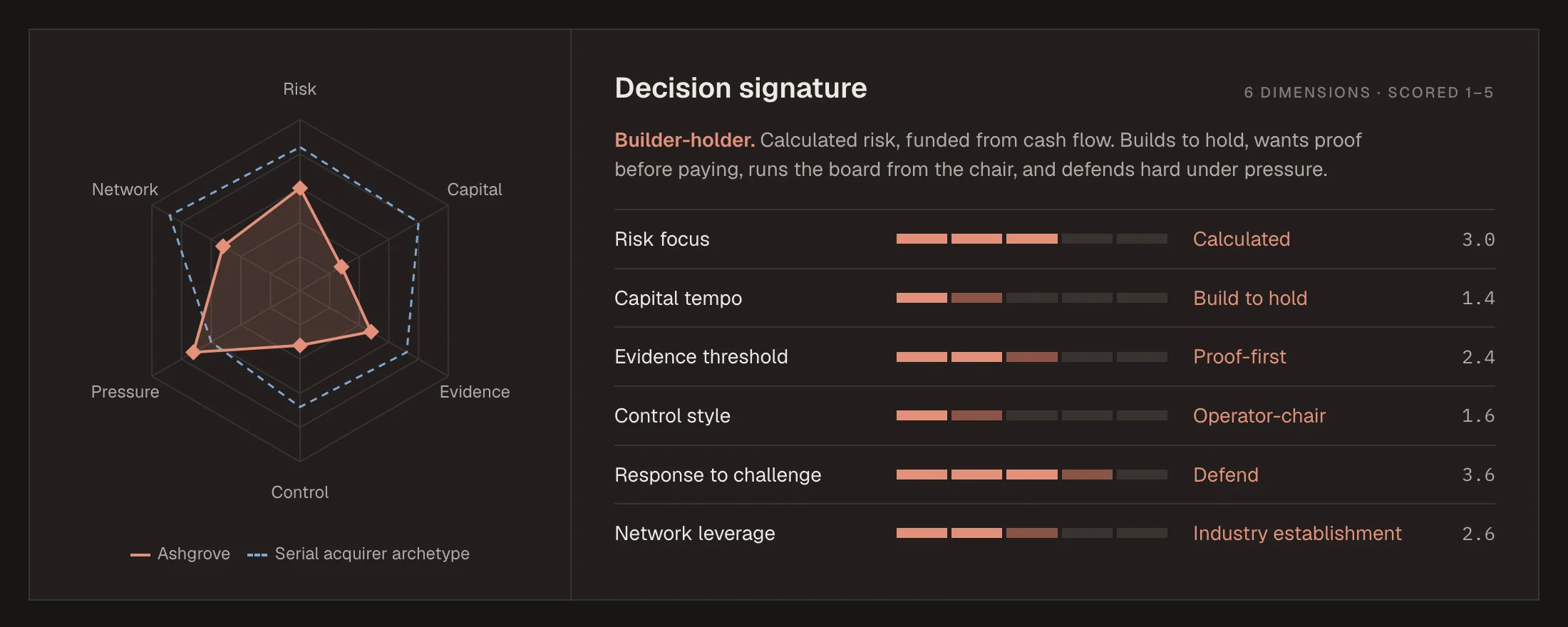
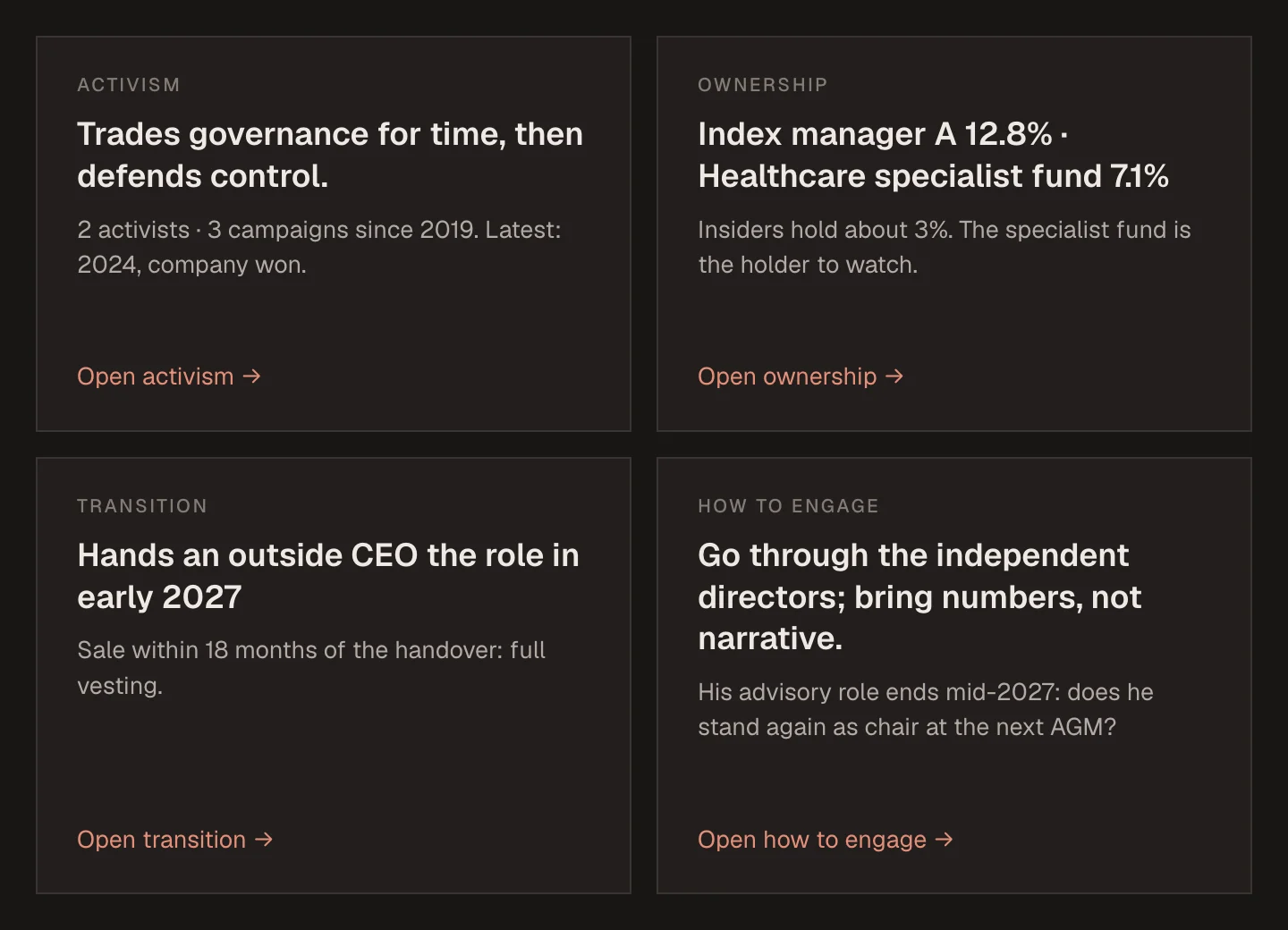
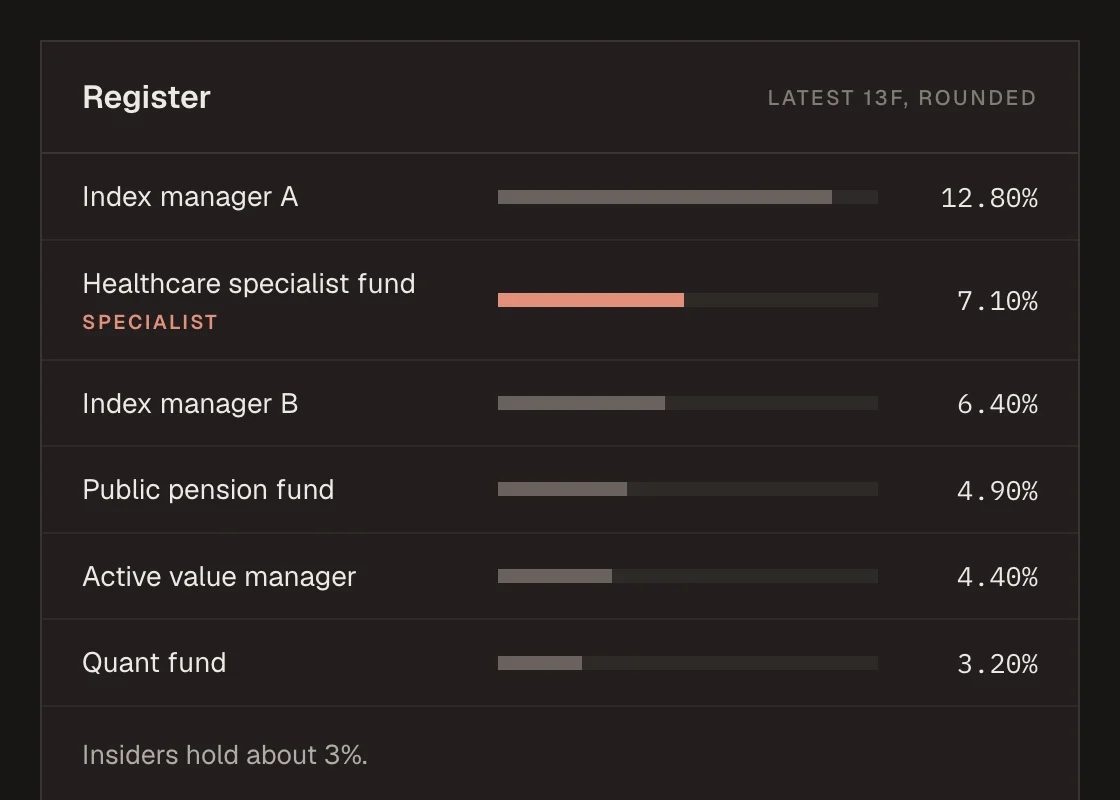
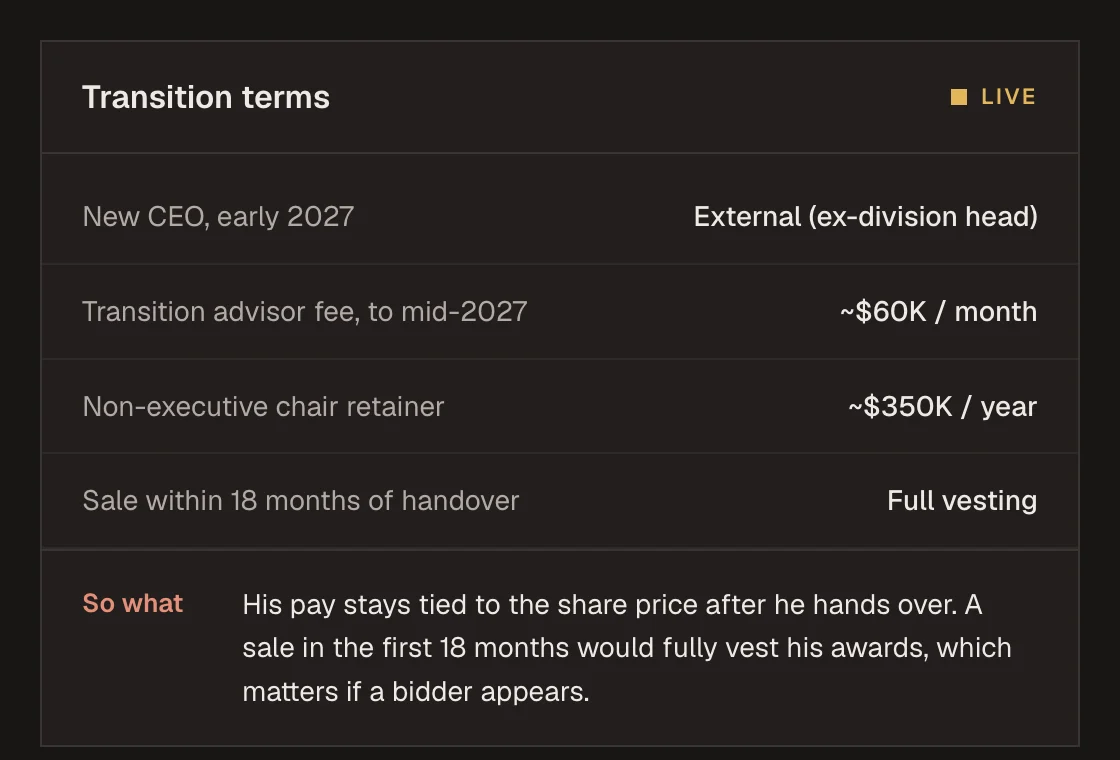
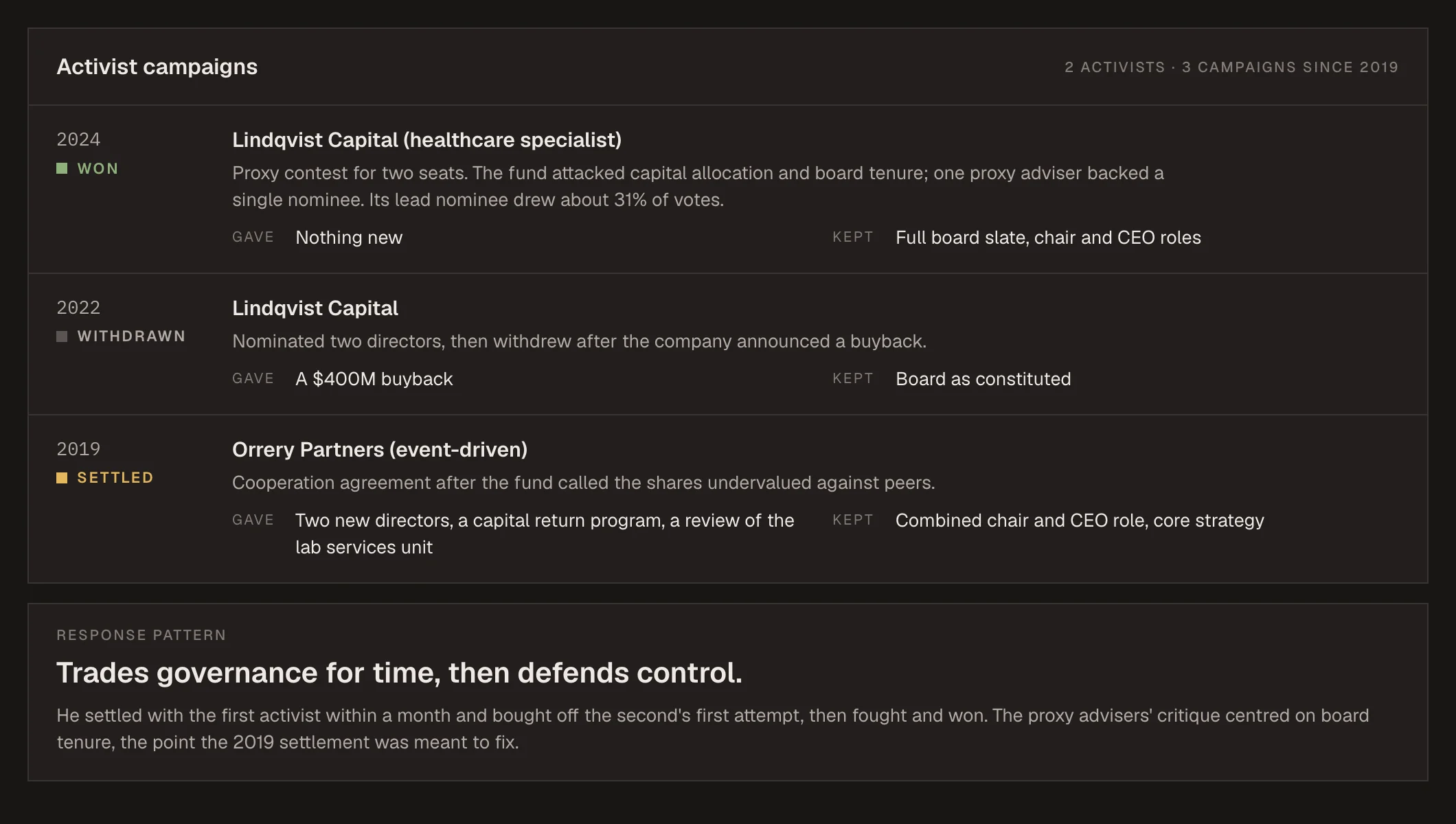
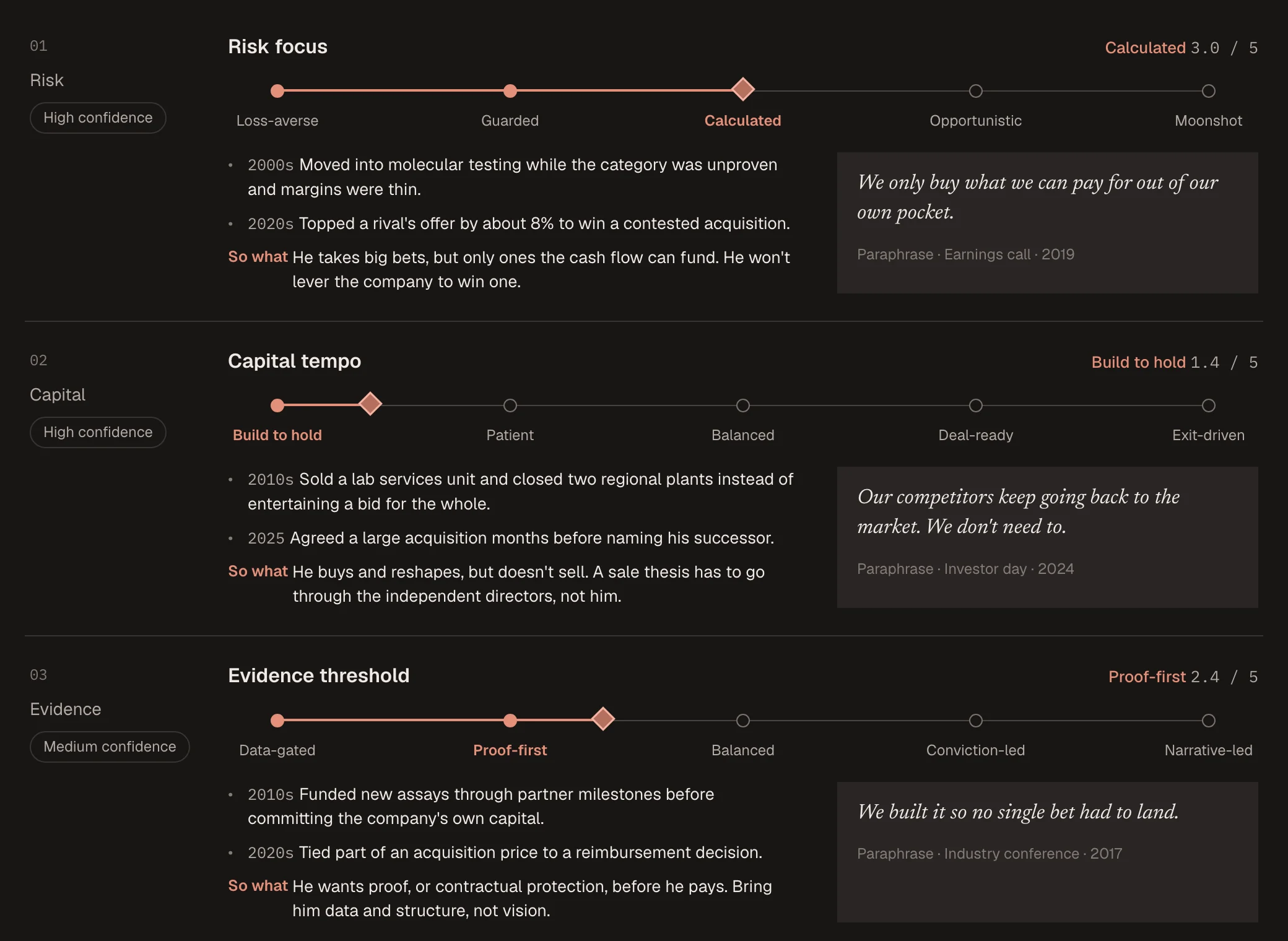
A research system that builds a deep profile of a company's key decision-makers, its largest holders, and the activists who have targeted it. Agents read proxy statements, ownership filings, settlement and cooperation agreements, employment terms, earnings calls, and interviews, and resolve every mention to the right person, fund, and company. Each leader is scored on six decision dimensions, such as risk appetite, capital tempo, and response to challenge, against a fixed rubric, and compared with archetypes like the serial acquirer. Every score carries dated evidence, a paraphrased quote with its source, and a confidence level, and a score without enough evidence is marked low confidence rather than guessed. Past campaigns are rebuilt one by one, with what the company gave up and what it kept, to show how leadership behaves under pressure. The register, transition terms, and change-of-control provisions sit alongside, and each profile ends in a short read on how to engage. A model checks that every judgment cites a passage that supports it, and an analyst reviews each profile before it reaches the team.
Examples